Gallery Wall Ideas for Small Spaces (Renter-Friendly)
#ad · Disclosure: This post contains affiliate links. As an Amazon Associate I earn from qualifying purchases. We also earn a commission from some other shops we link to (such as Best Choice Products and ArtZMiami, through Impact), at no extra cost to you. We only link to pieces that fit the look; prices and availability change, so check the retailer for current details. Photos are styled illustrations of the look, not the exact listed products. Full disclosure.
A gallery wall is one of the best ways to make a small space feel personal. It adds color and story to a wall without taking up any floor space, and with the right hanging method it comes down cleanly when you move out.
Here are layouts that suit small rooms, the pieces we would use to build one, and a simple way to plan it so you only put up each frame once.
4 layouts that suit small rooms
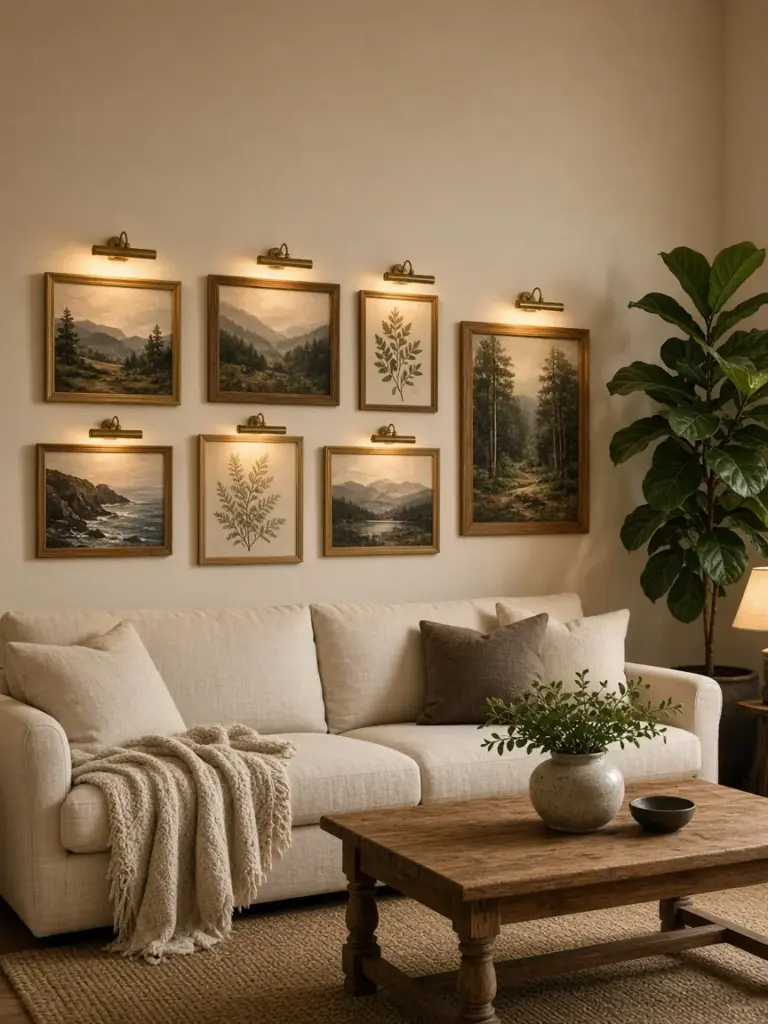
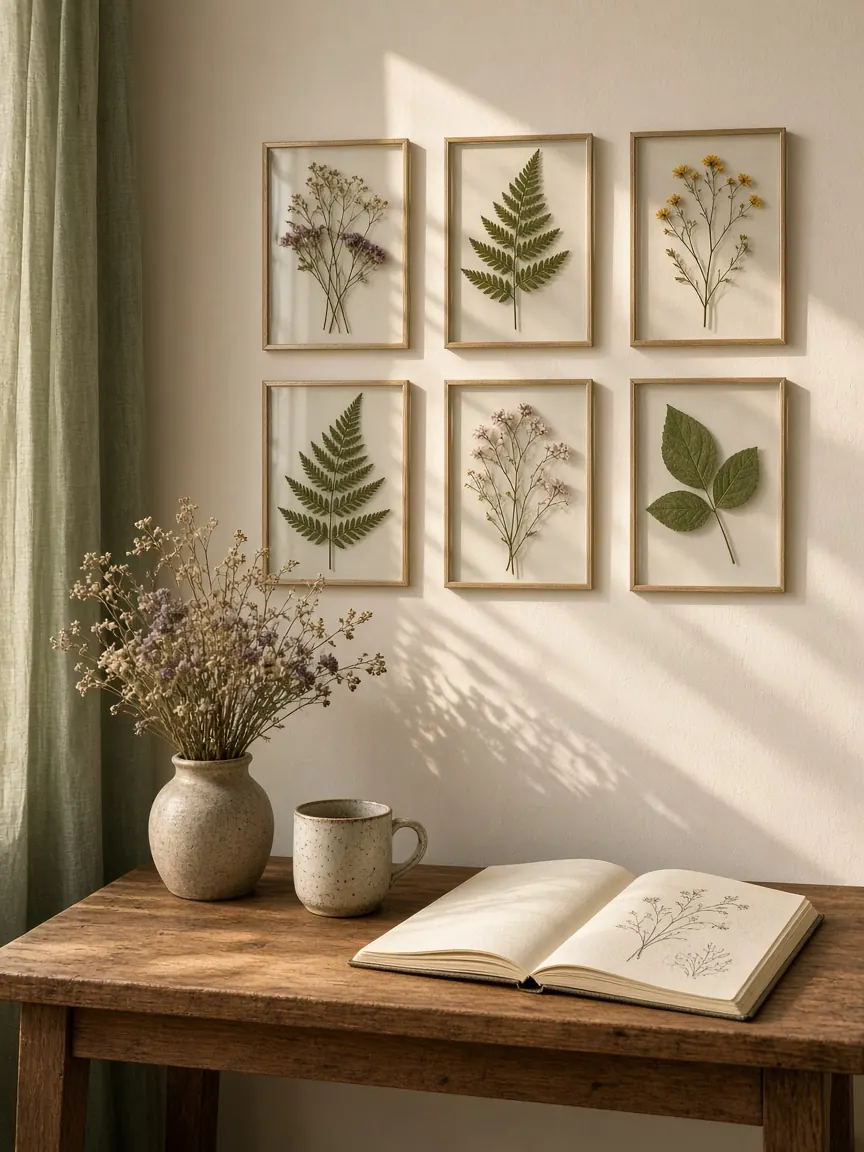
- Tight grid. Same-size frames in even rows (2×3 or 3×3) with equal gaps. Calm and tidy, good above a desk or a bed in a busy room.
- Loose cluster. Mixed frame sizes grouped around one larger anchor piece. Feels relaxed and collected over time.
- Staircase line. Frames that step up along a stairway or a slanted ceiling, following the angle.
- Ledge or niche display. Frames leaned on a shelf or in wall niches, so you can swap art without new holes.
Get the look: 5 pieces
10-piece gallery wall frame set
A matching set takes the guesswork out of sizes and colors. Fill it with family photos, postcards, pressed flowers or free printable art, and keep one style of frame so the mix of images still looks unified.
Why we picked it: Choosing sizes and finishes is where most first gallery walls stall. A matched set solves that in one decision, includes a mix of sizes for a balanced layout, and makes cheap or free prints look intentional.
Good for: a first gallery wall, above a bed or sofa.
Check price on Amazon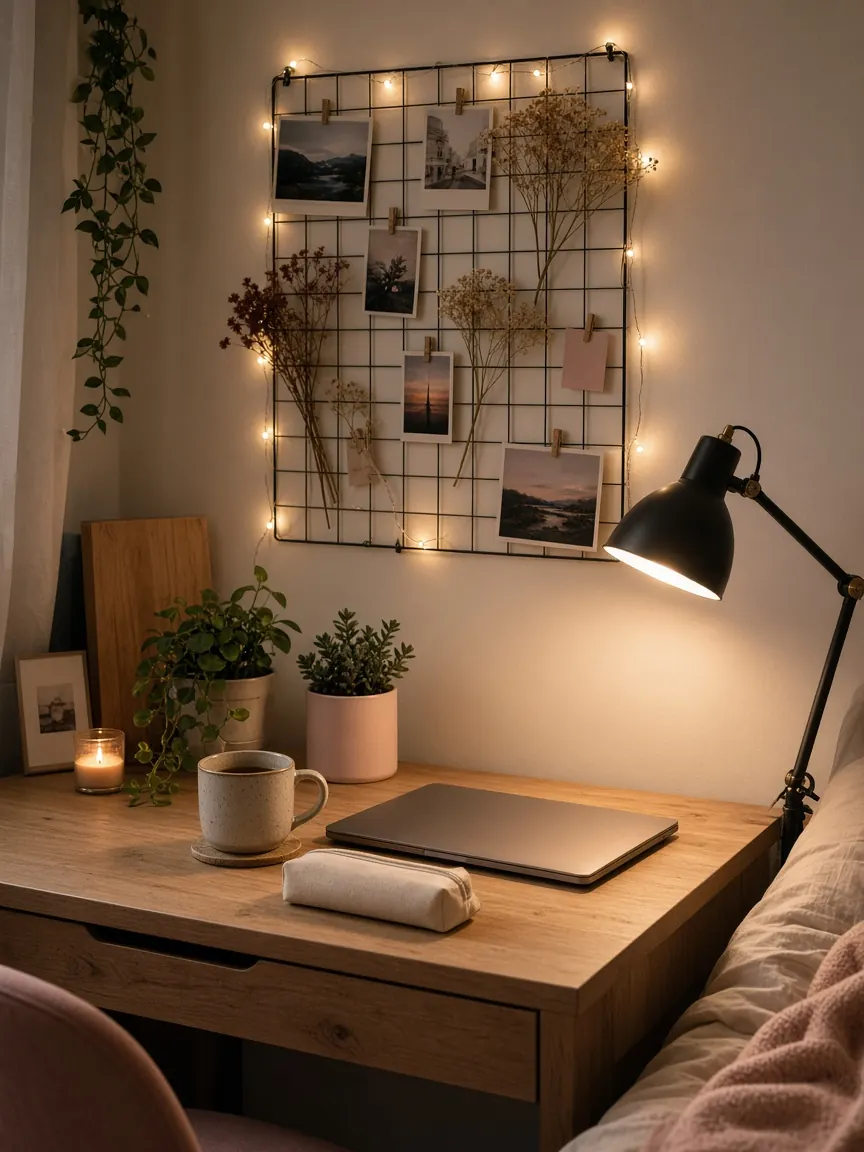
Battery fairy lights for a photo wall
Clip small prints to a strand of warm lights for a softer, changeable version of a gallery wall. It is ideal above a desk where you want something to look at but not a heavy frame cluster.
Why we picked it: Clip-on photo lights are the most forgiving gallery wall: no measuring, no level, and you can change every picture in a minute. They also give a soft glow at night, which suits small bedrooms and desk corners.
Good for: desks, dorms and walls you rearrange often.
Check price on Amazon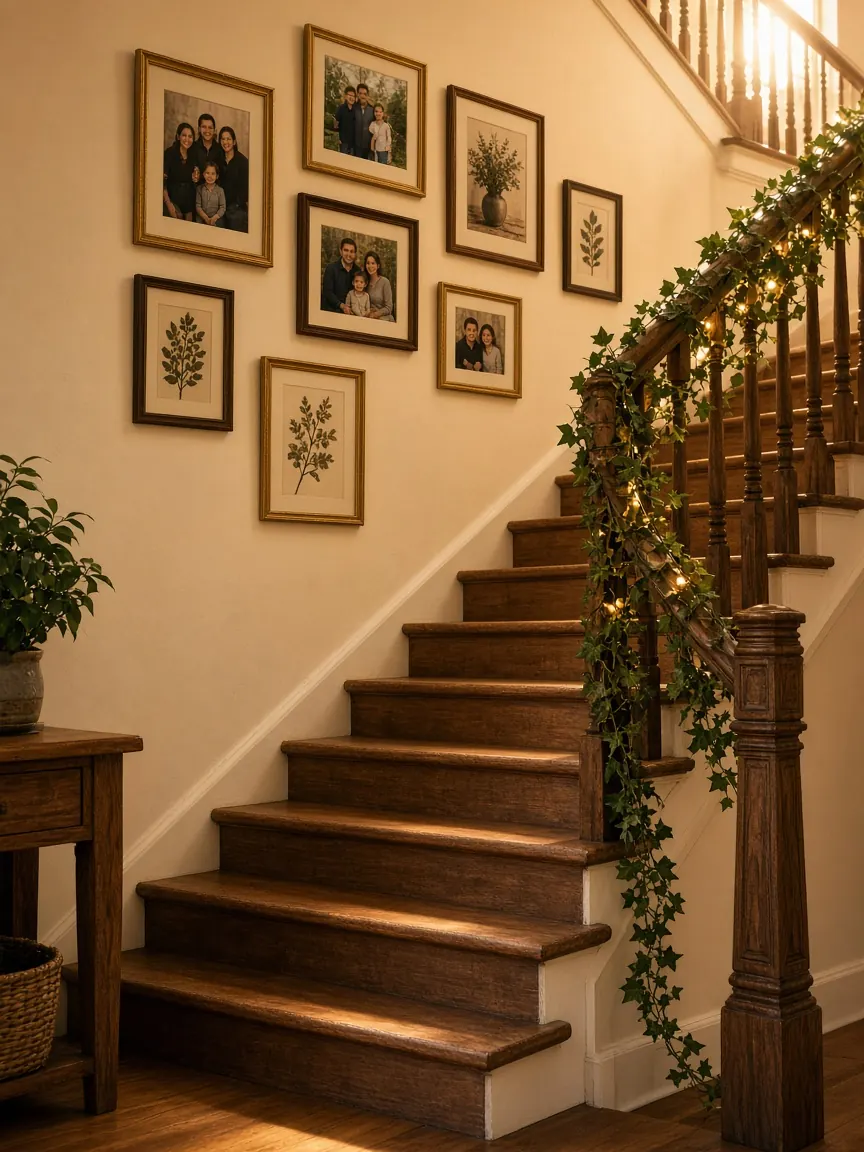
Artificial ivy garland
A few strands of ivy running along the top of a gallery wall or a stair rail soften the edges of frames and tie the display to the room.
Why we picked it: Greenery along the top edge stops a frame cluster from looking like a rectangle stuck on a wall. Faux ivy is light, easy to drape and needs no light or watering, which matters on a dim stairway or hallway.
Good for: staircase walls and the top edge of a cluster.
Check price on Amazon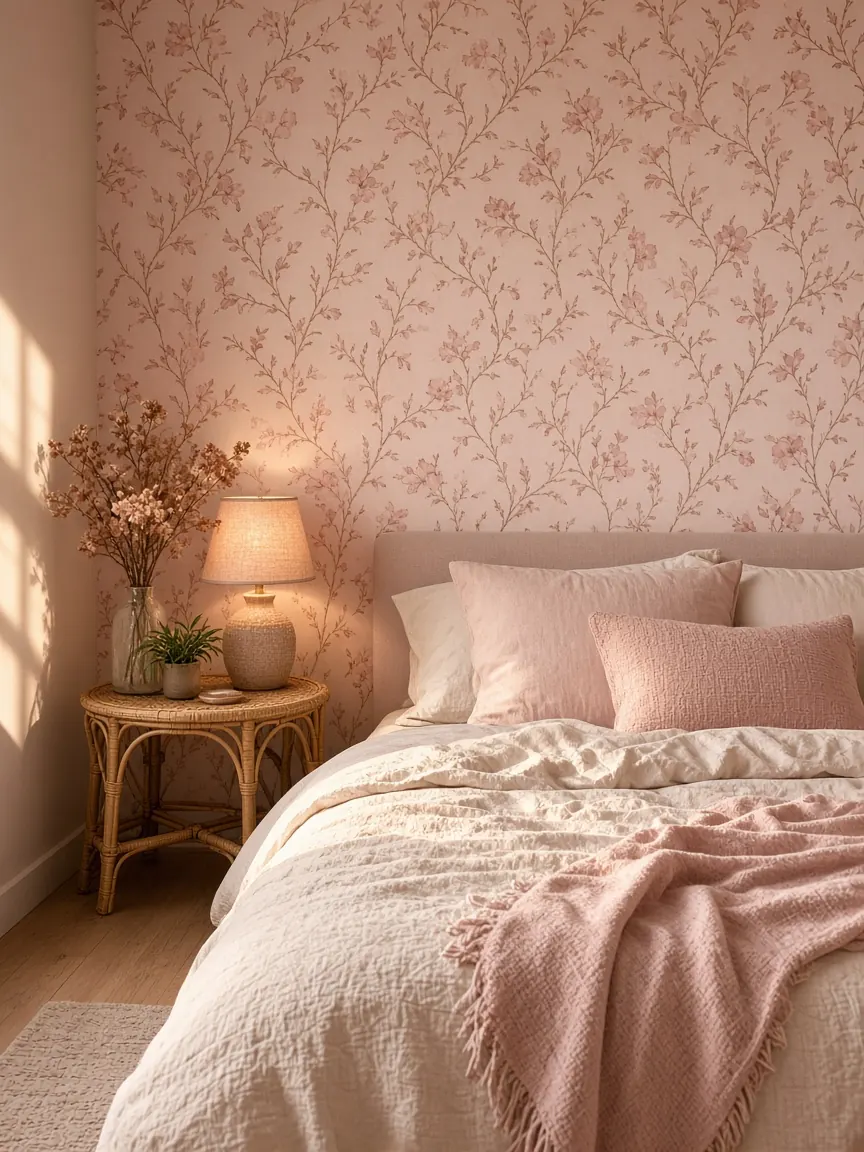
Peel-and-stick wallpaper
A patterned accent behind a small gallery wall or bed adds depth. Peel-and-stick versions are designed to come off without damaging paint when applied and removed carefully; test a small patch first.
Why we picked it: An accent behind the frames gives a small gallery wall more presence without adding more pieces. Peel-and-stick paper is a renter-friendly way to try pattern, and one small section is often enough.
Good for: an accent wall in a rental.
Check price on Amazon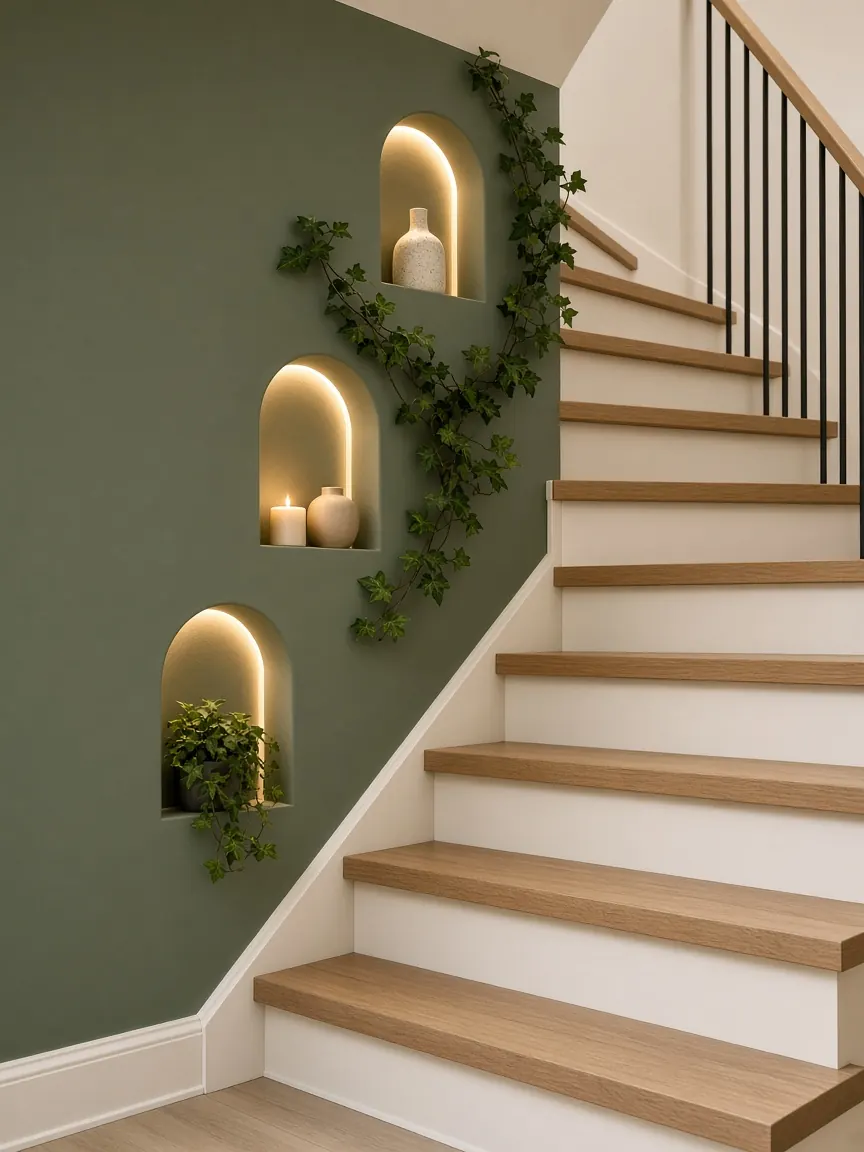
Wall propagation station
Mixing one living element into a frame wall keeps it from feeling flat. A slim propagation station hangs like a frame and holds plant cuttings in glass tubes.
Why we picked it: A living element breaks up a grid of frames and makes the wall feel lived in. This one hangs flat like a frame, takes no shelf space and holds easy cuttings like pothos that cope with indoor light.
Good for: adding green to a wall of frames or shelves.
Check price on AmazonOne playful piece for a small wall (#ad)
A gallery wall doesn’t have to be all frames. One 3D piece breaks up the grid and gives people something to smile at. The ArtZ Peel of Joy Wall Art is a resin banana “taped” to the wall, about 7.5 x 7.3 inches and 1.3 inches deep per the listing. It’s small enough to tuck between frames in a hallway, bathroom or kitchen. ArtZMiami showed it at $79 when we checked.
Renters: check how it mounts on the product page before you buy, and use removable hanging strips only if they’re rated for its weight.
See Peel of Joy at ArtZMiami (affiliate link)
Heads up: this section has affiliate links (#ad). If you buy through them, we may earn a commission at no extra cost to you. Prices below are what the shop showed when we checked on Oct 31, 2026, and they can change.
Choosing art that works in a small room
The frames get most of the attention, but what goes inside them decides whether the wall feels calm or busy. A few guidelines help:
- Mix personal and graphic. Combine a few personal photos with simple prints, postcards or pressed leaves. All photos can look like a family album; all prints can feel impersonal.
- Use mats to add space. A white or cream mat around a small print makes it look more finished and gives the eye somewhere to rest, which matters on a crowded wall.
- Keep black-and-white as a calm base. If you love color, let two or three pieces carry it and keep the rest in black and white or soft neutral tones.
- Repeat a shape or theme. Botanicals, city maps or line drawings repeated across a few frames link a mixed set together.
- Look for free or low-cost art. Museum archives with open-access collections, your own photos, children’s drawings, vintage book pages and dried flowers all make good, original fillers.
How to plan it in 20 minutes
- Measure the wall area. Above a sofa or bed, aim for a cluster about two-thirds of the furniture width.
- Lay the frames on the floor in the shape you want. Move them until the gaps look even (about 5 cm / 2 in is a good default).
- Trace and tape. Trace each frame onto paper, cut it out and tape the templates to the wall. Live with it for a day.
- Mark the hanging point on each template, then hang the frame through the paper and tear it away.
- Start with the anchor, the largest or most important piece, near eye level, and build outward.
Tips for a renter-friendly wall
Use removable strips for light frames
Picture-hanging strips hold lightweight frames well on smooth painted walls. Check the weight rating on the pack and press each strip for 30 seconds.
Center at eye level
The middle of the whole cluster should sit around 145 to 150 cm (57 to 60 in) from the floor. Lower it slightly above a sofa so it relates to the furniture.
Limit the palette
Choose two or three colors from the room (for example sage, cream and terracotta) and pick prints that repeat them. It makes a mix of images feel like a set.
Mix in texture
A small mirror, a woven piece or a plant among the frames adds depth and keeps the wall from looking like a photo board.
Leave breathing room
In a small room, leave some wall bare around the cluster. A gallery wall that runs edge to edge can make the room feel smaller.
Small-space gallery wall ideas by room
Every room has a spot where a gallery wall earns its place. Here is where it usually works best in a small home:
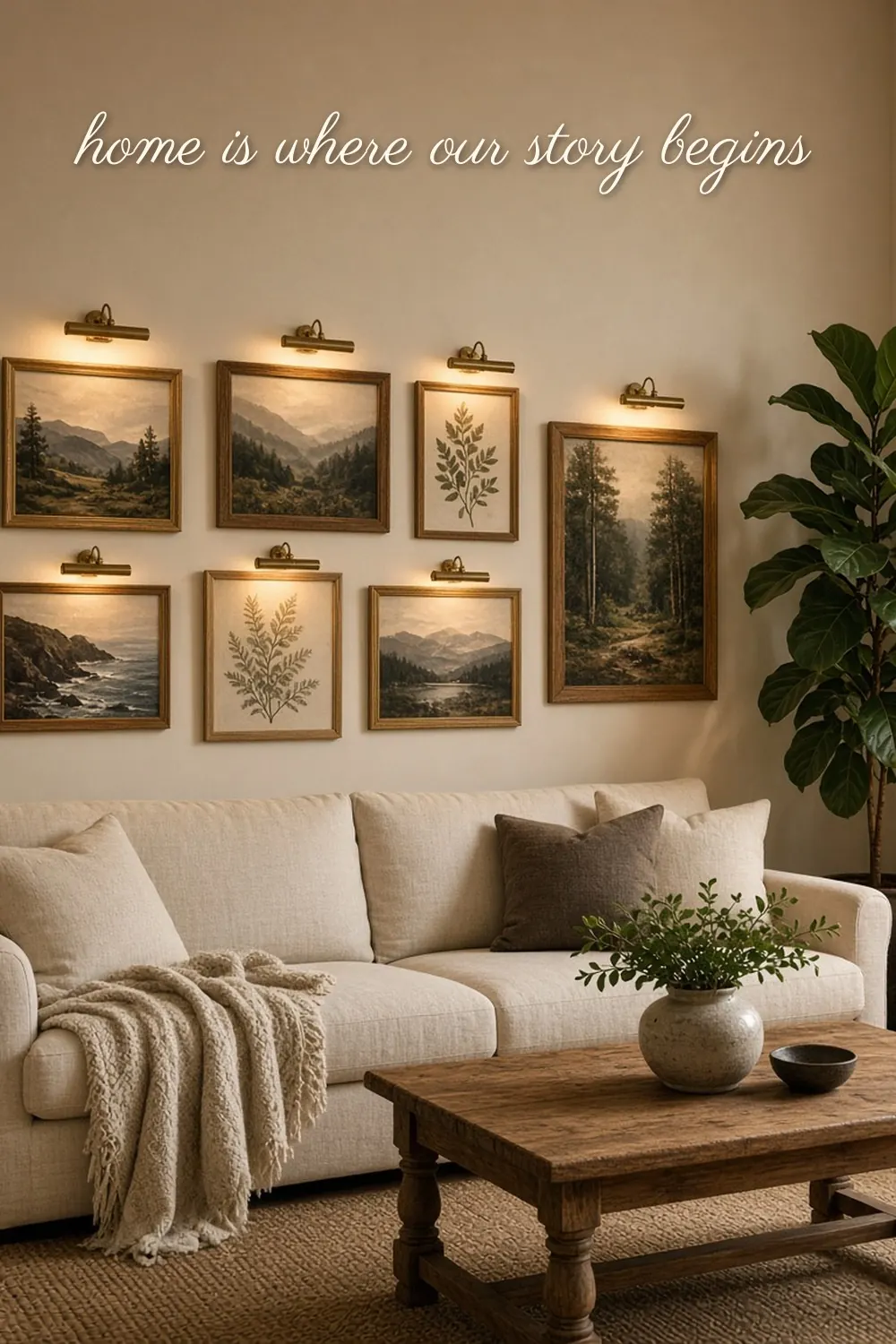
- Above the sofa. The classic spot. Keep the bottom row 20 to 25 cm (8 to 10 in) above the sofa back so heads do not knock frames.
- Above the bed. Use lightweight frames only, hung with secure strips, or swap to a picture ledge for peace of mind. A long, low cluster suits most headboards.
- Over a desk. A grid of small prints or a clip-light photo strand gives you something to look at on calls without taking desk space.
- Hallways and stairs. Narrow spaces with no room for furniture are perfect for frames. Follow the stair angle and keep the center line at a consistent height above each step.
- Kitchen or dining nook. Two or three small frames with food prints, recipes or botanicals make a dining corner feel separate from the kitchen.
- Entryway. A small mirror surrounded by a few frames helps you check your outfit and makes a tight entry feel bigger.
If you are short on wall space, a vertical gallery (two frames wide and four or five tall) beside a door or window draws the eye up and makes ceilings feel higher.
Want the wall to glow at night? Pair it with the ideas in our cozy fairy-light and ivy corner post. Planning a seasonal swap? Our small apartment Christmas decor ideas show how to switch a few frames and add greenery for December.
Save to Pinterest
Frequently asked questions
How big should a gallery wall be in a small room?
Over furniture, keep it roughly two-thirds of the furniture width. On an empty wall, a cluster about 1 to 1.5 m (3 to 5 ft) wide is plenty for most small rooms.
Can I hang a gallery wall without nails?
Yes, for lightweight frames. Use removable picture-hanging strips on clean, smooth paint, or skip the wall entirely with a picture ledge or shelf.
Should all the frames match?
Not necessarily, but a shared color (all black, all wood or all white) makes mixed artwork look cohesive, which matters more in a small room.
What do I put in a gallery wall if I don’t have art?
Personal photos, postcards, free open-access museum prints, pressed leaves and flowers, book pages, fabric scraps and your own sketches all work. Mixing a few of these makes the wall feel personal and original.
How far apart should gallery wall frames be?
About 5 to 8 cm (2 to 3 in) between frames is a good default. In a small room, keeping the gaps consistent matters more than the exact number.
How do I hang a gallery wall in a rental without losing my deposit?
Use removable picture-hanging strips for light frames, follow the weight limits on the pack and remove them slowly by stretching the tab down along the wall. A picture ledge or shelf is the safest option if your lease is strict.