How to Keep a Small Apartment Warm: 12 Renter-Friendly Ideas (No Drilling)
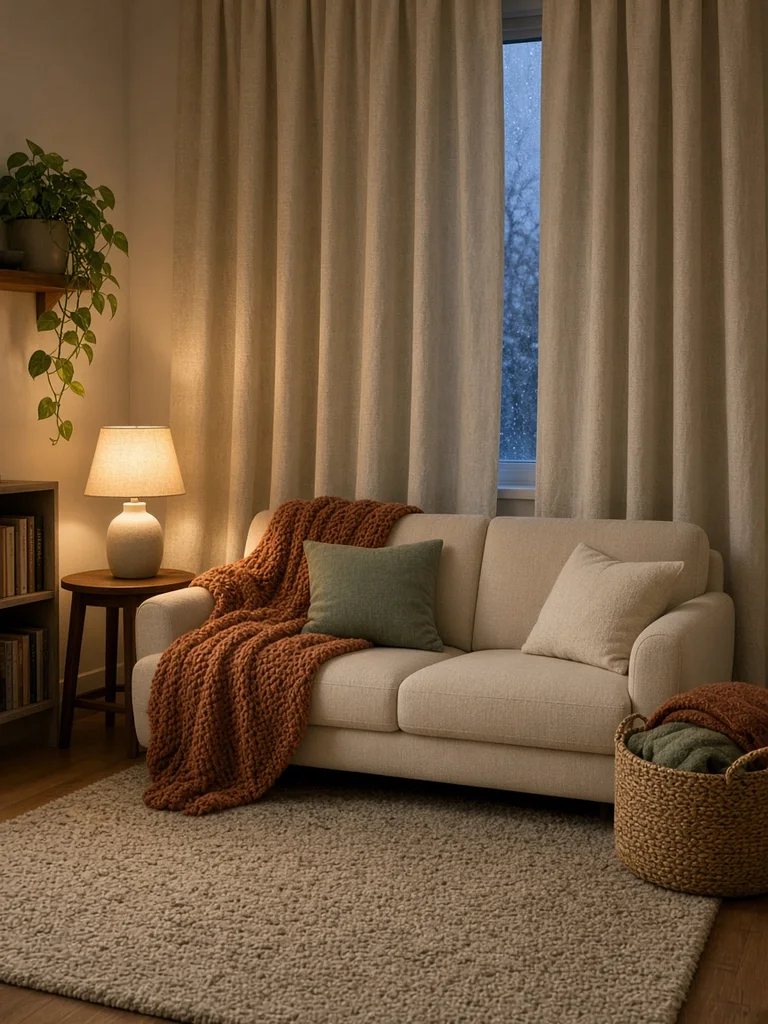
Disclosure: This post has affiliate links, marked “(affiliate link)”. As an Amazon Associate I earn from qualifying purchases. If you buy through one, TheCozyCorner may earn a small commission at no extra cost to you. We only point to things that fit the idea, and we don’t claim to have tested them. Prices and availability change, so check the retailer for current details. Full disclosure.
Cold apartment, thin windows, and a lease that says no holes in the walls? Yeah. That’s most of us.
The good news is you don’t need tools or your landlord’s drill to feel warmer. Below are 12 renter-friendly ideas for how to keep a small apartment warm. They go from free habits to a few cheap swaps, plus how to use a space heater safely and when to just call your landlord.
Start here: find where the cold gets in
1. Do a quick draft check
Before you buy anything, find the leaks. On a cold, windy day, slowly move the back of your hand around the edges of your windows, the bottom of your front door, and any outlets on outside walls. Feel a chill? That’s a draft.
Write down each spot. It takes 10 minutes, and it tells you where your money should go first. Most small apartments have two or three big offenders, usually the front door and one or two windows.
Block drafts at the door
2. Put a door draft stopper at the bottom of the door
That gap under your front door can let in a steady stream of cold hallway or outside air. A door draft stopper is a weighted fabric tube that sits against the bottom of the door. No tools, no drilling, and it comes off the day you move out.
One option we like the look of is the Sunolga door draft stopper. It has a cover that unzips for washing, loops at each end so you can hang it on the handle, and it comes in colors like sage green, terracotta and beige, so it can pass as decor instead of a sandbag. See it on Amazon (affiliate link)
A few honest notes:
- Measure your door first. Some buyers say the 38-inch size came up a little short, so check the length against your door width.
- It comes with hook-and-loop tape. In a rental, try lying it against the door before sticking anything to the door or floor, because adhesive can leave marks.
- It can help reduce drafts at the door. It won’t fix a building that’s poorly insulated, and we can’t promise it lowers your bill.
If you want to compare, search for a draft stopper for an apartment door in your door’s width. They’re sold in lots of lengths.
3. Check the door’s weatherstripping (and tell your landlord)
If you can see daylight around the sides or top of the door, the weatherstripping is probably worn. Replacing it is often the landlord’s job, so report it first. More on that in idea 12.
Keep heat in at the windows
4. Close your curtains at night, open them on sunny days
This one’s free. The U.S. Department of Energy suggests closing curtains and shades at night to protect against cold drafts, and opening them during the day to let in warming sunlight. (Energy Saver Guide, energy.gov)
Make it a habit. Open the curtains when you leave in the morning, and close them when it gets dark.
5. Hang heavier, lined curtains (no new holes)
Thin sheers look nice and do very little in January. Swap them for lined or thermal curtains for the cold months. Hang them long enough to reach the sill or floor, so cold air can’t spill out underneath.
No drilling needed if you:
- use the rod that’s already there,
- use a tension rod inside the window frame, or
- use no-drill curtain rod brackets that clip or stick on. Read the lease and test any adhesive on a small spot first.
6. Try removable window film or a window insulation kit
Renter friendly window insulation for winter usually means one of two things:
- Removable window film that clings to the glass. The Department of Energy’s guide mentions low-e window film as a way to keep heat from radiating out, and says films are rated by the NFRC (National Fenestration Rating Council). Look for one sold as removable.
- Shrink-film insulation kits, a clear plastic sheet you tape around the frame and tighten with a hair dryer. They can help with how to keep drafts out of windows. But the tape can pull paint, so test it on a hidden corner, and ask your landlord if you’re unsure.
Want some holiday cheer on the glass too? Christmas window clings, like this white-line village set, are pure decor. They don’t insulate. But they make a plain window feel festive with no glue. Reviews are mixed on how well they cling. See it on Amazon (affiliate link)
For more ways to dress a small space for the season, see our small apartment Christmas decor ideas.
Warm up the floors and furniture
7. Put a rug on cold floors
Hard floors feel cold under your feet, especially over an unheated space. A thick rug, or a wool or shag rug where you sit and walk most, makes the room feel warmer right away. Add a rug pad or rug grippers so it doesn’t slide. Choose ones that are safe for your floor type, since some can mark wood or vinyl.
8. Move the sofa and bed away from cold walls
This one’s free too. If your bed or couch sits against an outside wall or right under a drafty window, pull it a few inches into the room, or move it to an inside wall. Just don’t block radiators, heating vents or baseboard heaters with furniture or curtains. Heat needs room to move.
Warm up you
9. Layer the bed
Your bed is the easiest place to get warm. Try flannel or jersey sheets, a duvet with a heavier insert, and a throw folded at the foot. It’s the onion approach. Several thin layers trap more warmth than one thick one, and you can peel one off if you get hot. Our guide on how to make a small bedroom cozy has more ideas for layering.
10. Layer yourself, and keep throws where you sit
Warm socks or slippers, a sweater, and a throw on every seat sound basic. They work. Keep a basket of blankets by the sofa so nobody turns up the heat just because they’re sitting still.
11. Use warm lighting for a cozier feel
Lights won’t heat your apartment. But a room lit by warm, low lamps feels cozier than one under a cold ceiling light. That’s how to make a cold apartment warmer in spirit, at least.
Two easy ideas:
- A candle warmer lamp. It melts a jar candle from the top, so you get the glow and scent with no open flame. The Innqoo one has brightness settings and a timer, and the listing says it’s a 120V lamp. It does get hot, so unplug it when you leave, keep it away from anything that can burn, and follow the maker’s instructions. See the Innqoo candle warmer lamp on Amazon (affiliate link)
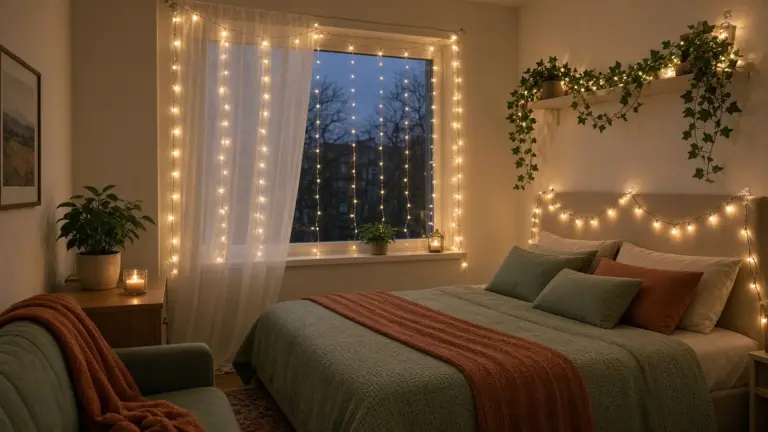
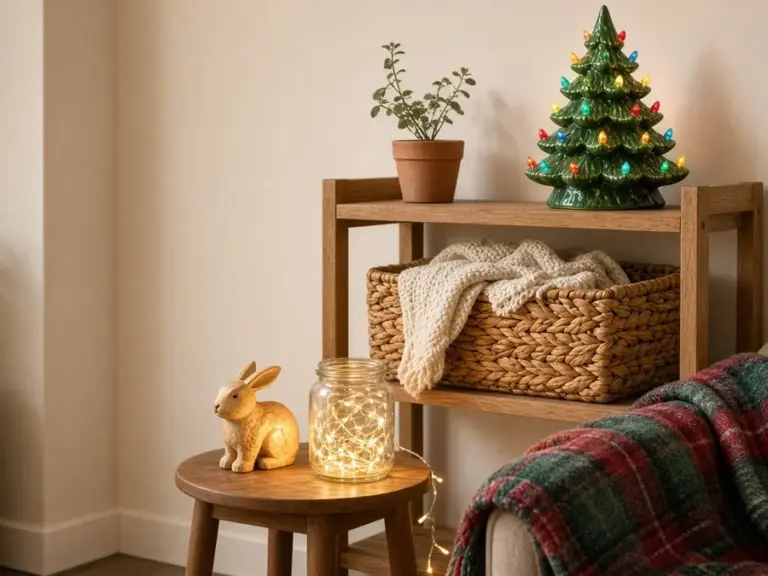
- Fairy lights, battery operated. Tuck them into a jar or along a shelf, with no outlet needed. Reviews are mixed on battery life, so keep spare coin batteries around. See the Brightown 12-pack on Amazon (affiliate link) For more ways to use them, see our fairy light and ivy corner ideas.
If you use a space heater, use it safely
If you’re wondering how to keep an apartment warm without a heater, ideas 1-11 are your answer. But if you do use a portable space heater in a small room, follow the official safety basics. Heating equipment is one of the leading causes of home fire deaths, according to the National Fire Protection Association. (NFPA)
The U.S. Consumer Product Safety Commission (CPSC) recommends:
- Keep the heater at least 3 feet from beds, curtains, sofas, clothes, papers and anything else that can burn.
- Plug electric heaters directly into a wall outlet, never an extension cord or power strip, and don’t run the cord under a rug.
- Put it on a stable, level surface where it won’t get knocked over.
- Turn it off when you sleep or leave the room.
Sources: CPSC winter safety tips (2026) and CPSC portable electric heaters.
Carbon monoxide: CPSC says never use a gas range, oven or clothes dryer to heat your home. It also recommends battery-operated or battery-backup CO alarms on every level of the home and outside sleeping areas. (CPSC carbon monoxide Q&A)
12. Talk to your landlord
Here’s the one people skip. If your apartment is truly cold, it may not be a decor problem. Report it in writing, by email or through your building’s portal, so there’s a record. Mention:
- heat that isn’t working or doesn’t reach a room,
- windows that don’t close or lock tight,
- worn or missing weatherstripping on doors and windows,
- missing or broken smoke or CO alarms.
Many cities and states have rules on rental heating. Check your local housing office or tenant rights group for what applies where you live.
Your next step
Do the 10-minute draft check tonight. Then fix the worst spot first. For most small apartments, that’s a door draft stopper at the front door and closed curtains after dark. Small steps, warmer room.
Frequently asked questions
How do I keep a small apartment warm without a heater?
Block drafts at the door, close curtains at night, add a rug, and layer your bed and yourself. Report broken heat or leaky windows to your landlord.
Are door draft stoppers renter-friendly?
Yes. A freestanding door draft stopper sits against the door with no tools. If it comes with adhesive tape, test it first, since some adhesives can mark floors or paint.
Does window film damage rental windows?
Static-cling film is designed to come off. Shrink-film kits use double-sided tape that can pull paint, so test a small spot and check with your landlord.
Is it safe to use a space heater in a small apartment?
Follow CPSC guidance: keep it at least 3 feet from anything that can burn, plug it straight into a wall outlet, and turn it off when you sleep or leave the room.
What should I do if my landlord won’t fix the heat?
Put your request in writing and keep copies. Then contact your local housing or code enforcement office, or a tenant rights group, to learn the rules where you live.
Do candle warmer lamps or fairy lights heat a room?
No. They add a warm glow that makes a room feel cozier, but they aren’t heaters.